
 2024-08-29
 PODCAST
 share
A tractor reaches the far end of a field and its mobile connection disappears. The driver can carry on working, yet the machine may struggle to send field records or reach a remote service specialist. Satellite connectivity in agriculture gives connected equipment another way to exchange data when mobile coverage is patchy. Which tasks really need an internet connection?
Where satellite connectivity in agriculture helps
Modern farm machines can generate guidance lines, application records, fault messages and other useful information. Farms often want this data to reach the office or equipment dealer without someone driving back to find a signal. A satellite internet link can support that exchange where the equipment and service are compatible.
In a 2026 European Commission study, more than a third of the surveyed stakeholders rated their coverage poor or very poor. The study included 147 respondents and identified dead zones, weak upload capacity and interruptions as practical obstacles. These findings describe the survey group, not every European farm.
A satellite link carries communications. GPS and other global navigation satellite systems supply positioning signals. A tractor’s guidance, obstacle detection and safety functions have their own technical requirements. Internet coverage alone does not turn a conventional machine into an autonomous one.
What John Deere and Starlink actually built
John Deere’s January 2024 agreement with SpaceX shows how satellite connectivity in agriculture can support machine-data exchange where mobile coverage is weak. Deere had already presented an autonomous tractor at CES in 2022. The two developments address different technical needs.
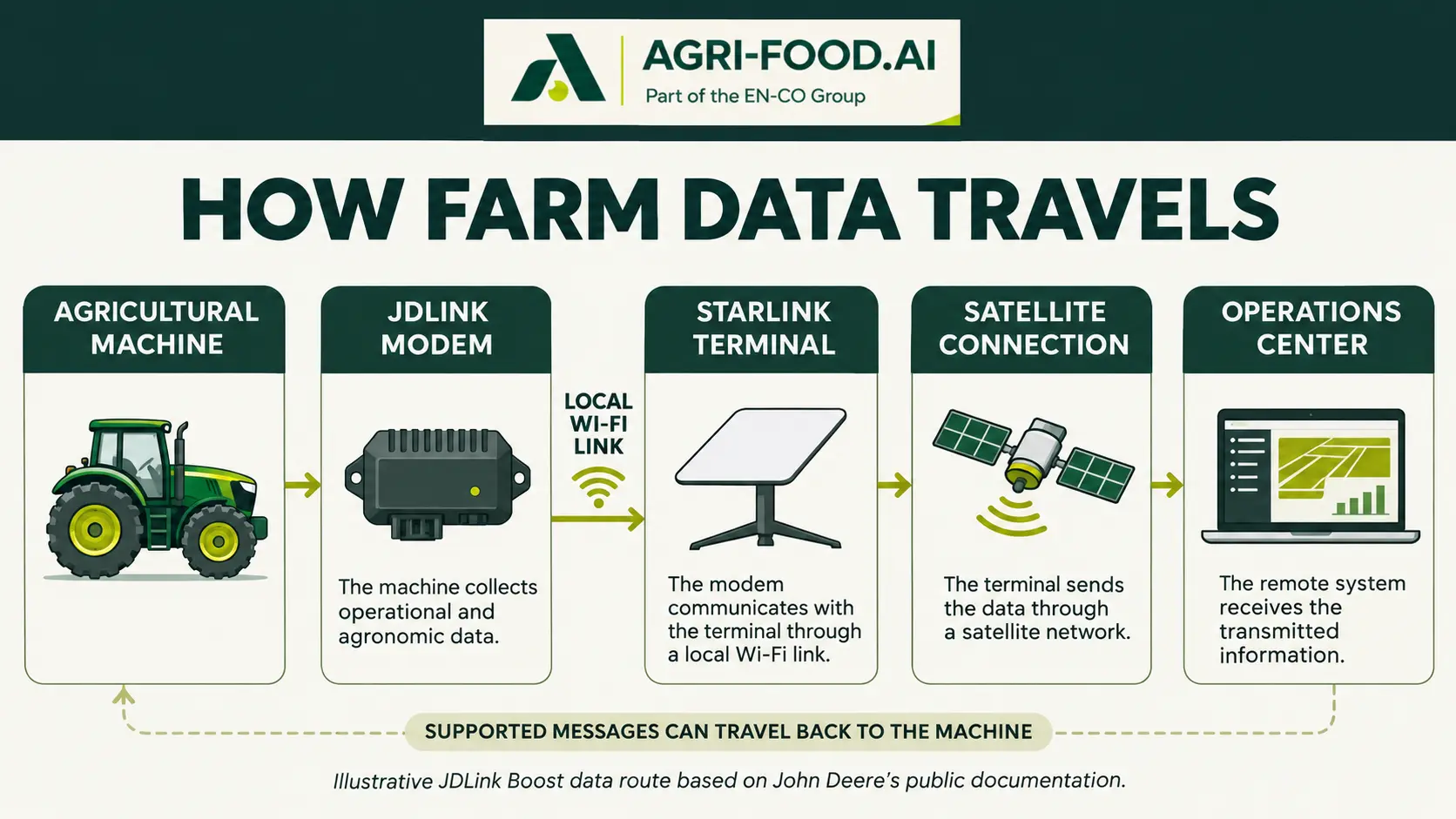
JDLink Boost connects compatible agricultural machines through a ruggedised satellite terminal and a JDLink modem. The modem collects machine and agronomic data, uses the terminal’s local Wi-Fi link and sends information through the satellite service to John Deere Operations Center. The reverse path allows supported messages to reach the machine. John Deere lists remote diagnostics and machine-data exchange among its use cases.
Starlink’s John Deere case study lists deployments in the United States, Brazil, Canada, Australia and New Zealand. Compatibility, installation and service availability depend on the equipment and market. A satellite connection is an option to assess, not a universal upgrade for every tractor.
Why farms still need an offline plan
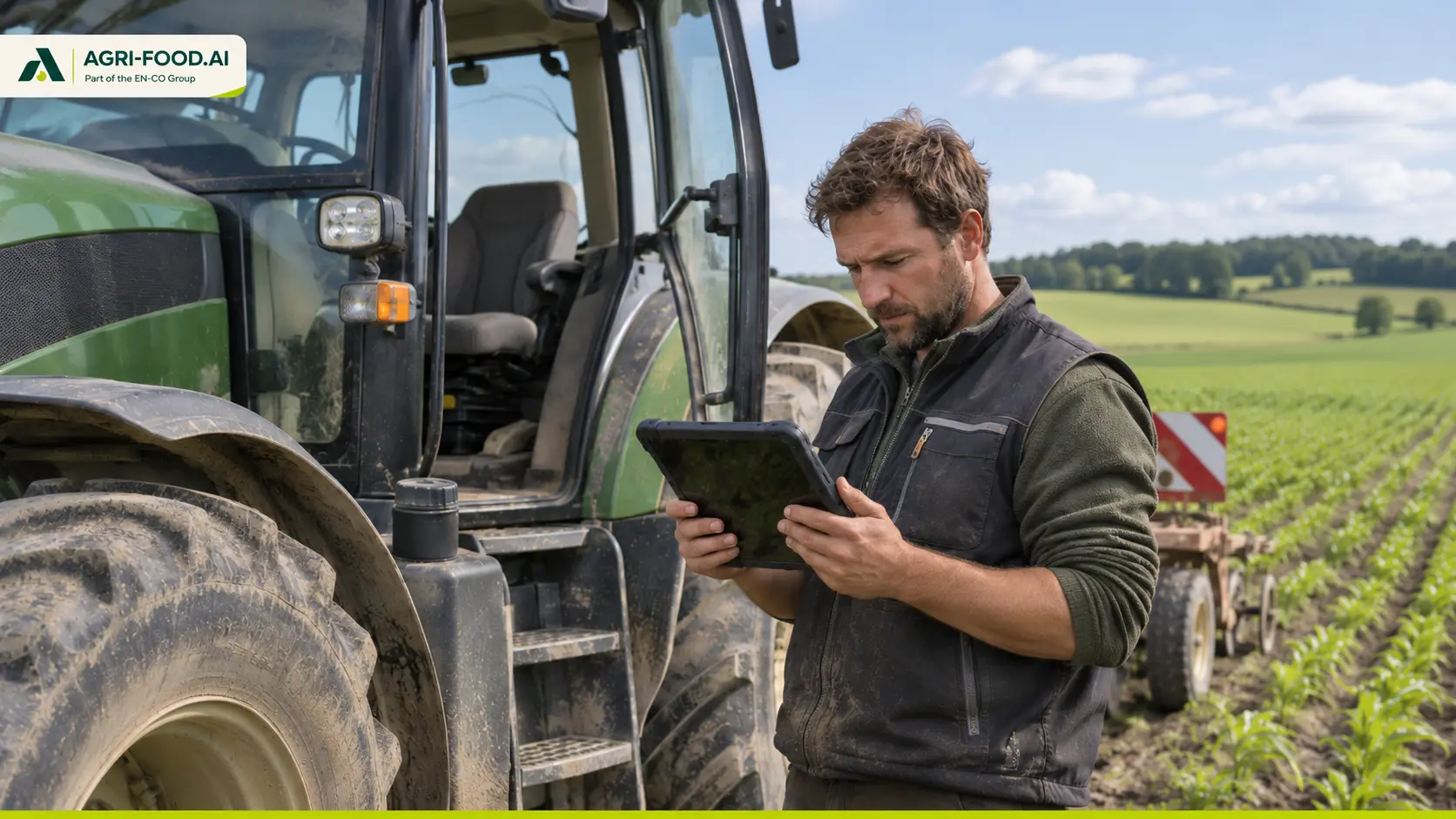
Satellite connectivity in agriculture still has physical and operational limits. A terminal needs a suitable view of the sky, a stable power supply and the right installation. Trees, buildings, terrain or movement can interfere with reception. Subscription costs, data handling and support also belong in a farm’s evaluation.
Some systems keep working locally and upload records when the connection returns. Others depend on a live link for particular functions. Before connecting a new sensor or machine, the farm should ask what happens to measurements, alerts and work records during an outage. Can staff recover the missing information, and who checks whether the transfer finished?
AGRI-FOOD.AI’s Maduro app provides a useful example of local operation. Its product page says users can assess coffee cherry ripeness from photographs offline. The company’s AnimalCounter counts animals passing through a defined area and offers options for forwarding records. Each application has its own data flow, so remote access and synchronisation need confirmation for the chosen setup.
How to test satellite connectivity in agriculture
A useful trial of satellite connectivity in agriculture starts with five checks at the farm.
- Coverage. Check reception on the routes where the operator actually works.
- Compatibility. Confirm that the machine, modem, terminal and local service plan work together.
- Data transfer. Send a real work record and verify its arrival at the farm office.
- Outage recovery. Test a controlled interruption and check whether the system stores and later sends missing records.
- Support and costs. Verify the available remote-support functions, power requirements and ongoing charges.
A practical result is whether the work record reaches the office without a second trip. See AGRI-FOOD.AI’s overview of IoT and edge computing for related context.
When a machine loses its mobile signal, the right next step depends on the task and the data. Satellite internet may close a communications gap, while local processing and sound record-keeping protect work during interruptions. AGRI-FOOD.AI can discuss the data and machine-vision requirements of a specific agricultural workflow.

Need to understand your farm's data flow?
2024-08-29


 Our website uses cookies